
Pilagá Community
From the shore of the Bañado de la Estrella, in Formosa, Argentina, the Pilagá women extract the leaves of the Carandillo plant (Trithrinax campestris), transforming it into beautiful objects. In women’s organizations, the best artisans teach the youngest the art of weaving, transmitting ancient knowledge.
The Carandillo process
The Pilagá women go to the watersheds to collect the leaves of Carandillo. They usually walk up to 3 miles to find the best leaves. They can collect up to a hundred leaves (large products can take up to 120 of the best leaves). Since the Carandillo is not cultivated, women only take part of the leaves from the plant, allowing new leaves to continue growing.
After the recollection, the shredding begins. This process allows the leaves to be transformed into fine and soft fibers that will later be used as threads to weave. Once the shredding has been achieved, they let the fibers rest in the sun for a day to whiten. Then, they hand-weave Carandillo into beautiful and practical pieces that will bring a touch of nature into your space.


Handwoven by Carmen in Chaco, northern Argentina, this simple, lightweight basket is easy to carry and perfectly sized for flowers, farmers market runs, or a couple of sourdough loaves.
Like many women in her community, Carmen harvests the small palm-like plant called carandillo, then gathers, separates, and prepares the fibers by hand before weaving each piece using ancestral techniques passed down through generations. These woven objects help support income and socio-economic development in this remote rural region while preserving Argentina’s rich craft traditions.
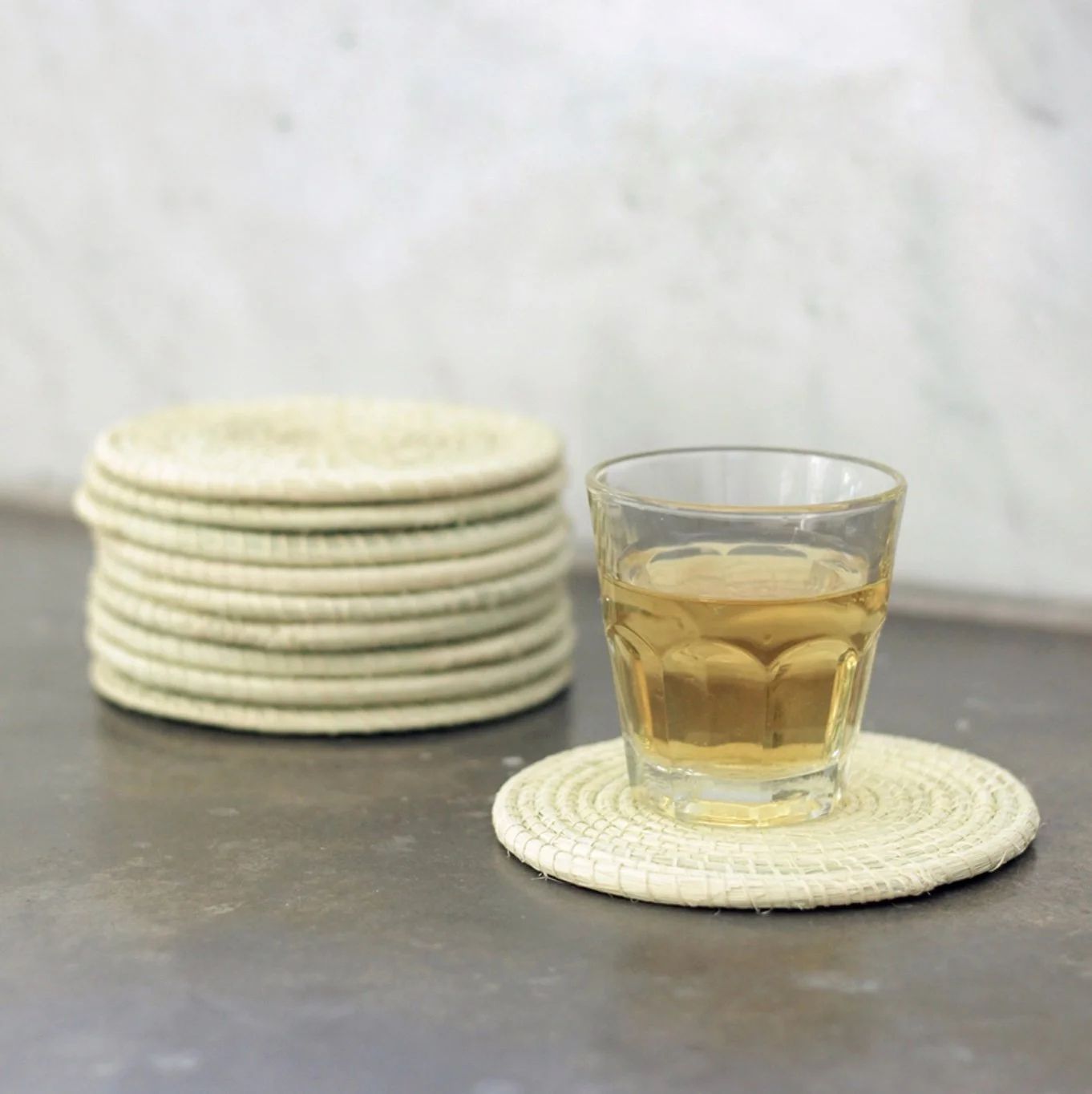
Carandillo fiber naturally varies in tones ranging from pale yellow to soft green, making each basket subtly unique.
Size: W 12” × D 8” × H 14” (9” body + 6” handles)
Color: Natural (undyed)
Material: 100% Carandillo fiber
Technique: Handwoven
Origin: Chaco, Argentina
Learn more about Pilagá Community
Shipping + Returns